


Nine Days in Iceland: What I Went Back to Rediscover

Updated: Sep 1
In April 2010, a volcano nobody outside Iceland could pronounce grounded half of European aviation for a week, and Eyjafjallajökull became, briefly, the most famous mountain on Earth. Most people met Iceland that way — through the ash cloud, through flight boards gone red, through headlines. I didn't. By then I'd already spent years falling for the place through its music, its sagas, its stubborn, isolated creativity — long before the eruption ever put it on anyone else's map. The volcano, as it turned out, didn't introduce me to a country. It introduced the rest of the world to a country I already loved.
I'd first gone to Iceland to build it as a product for the Brazilian market — the campaigns, the partnerships, the work of turning a name Brazilian travelers barely knew into a destination they'd dream about. That work never really stopped: programs that eventually covered the whole island, partnerships that led to opening our own Sapiens Travel office on the ground in Reykjavík, groups I guided personally through fjords, glaciers and lava fields. Oddly, for someone who's crossed the island in every season since, I was only ever there in summer once — on that very first trip, flying in from JFK straight off a Virtuoso Travel Week, half-expecting a rock and finding, instead, a country that rearranged how I thought about travel altogether.

Since then, I've stood with groups in nearly every region of Iceland watching auroras fold across the sky — lucky every time, in a way that never quite stops feeling like luck. But this last trip, I flew back to our office in Reykjavík for a reason that doesn't come around often: a solar eclipse tracking straight over the island.
I flew back to our office in Reykjavík for a reason that doesn't come around often: a solar eclipse tracking straight over the island. I've lost count of how many times I've made this trip, but I've learned never to assume I've seen everything Iceland has to show me. Nine days on the ground, revisiting favorite routes, sitting with our guides, walking through our newest hotel partners — and the island still found a way to surprise me. It always does. That's the thing about a country built entirely on the friction between fire and ice: it never quite sits still long enough to be fully known.
A City That Doesn't Need to Be Big

Reykjavík still does the thing it always does. The northernmost capital in the world meets you with an energy that has nothing to do with size — you can walk the whole center in twenty minutes, and yet it feels like it's punching several weight classes above its population. I think that's what happens when a city has spent centuries with nothing to do in the dark but make things: music, design, literature, food. Isolation, it turns out, is an extraordinary creative constraint.


I always end up back in the same handful of spots. Some of the coolest shops in the city for winter gear — the kind of place that makes you rethink what a parka is supposed to look like. Vinyl stores I can't walk past without going in, shelves thick with Icelandic bands you've never heard of and a few you definitely have. Cafés that feel less like businesses and more like someone's living room, which they sort of are. And the restaurants keep raising the bar every time I come back. Icelandic chefs never stop amazing us — there's a confidence in how they treat scarcity, turning what the land and sea actually give you into something that tastes inevitable rather than improvised.
The Fault Line Beneath the Democracy


From there, the Golden Circle was the obvious place to start: Geysir, Gullfoss, Þingvellir. I've walked that rift valley more times than I can count, and it still gets me every time. This is the site of the world's oldest parliament — the Alþingi, convened outdoors, in the open air, on the exact fault line where the North American and Eurasian tectonic plates are pulling apart. Icelanders didn't choose that spot by accident or coincidence. They built self-governance directly on top of the geology that explains why the island exists in the first place, why it grows a few centimeters wider every year, why nothing here has ever been static. It's the kind of detail our guides live for — as fluent in Iceland's culture, flavors, and lifestyle as they are in its geology and history, which is exactly why a walk through Þingvellir with the right person turns into something closer to a conversation about how democracy and geography were never really separate ideas here.
Inside the Volcano
The next day was one I'd never actually done myself, which after all these years of coming back still surprised me: descending into the magma chamber of a dormant volcano, one of the only places on Earth where that's even possible. On the way there, we crossed paths with a family of Arctic foxes — pure luck, and worth the detour alone. You go down in an open cable lift, through rock that hasn't seen daylight in thousands of years, into a chamber the size of a cathedral that used to be full of liquid fire. It amazed me in a way I wasn't fully prepared for — there's something almost impolite about standing inside the exact place a mountain used to explode from. We can arrange it privately, too, with a picnic or a toast inside the volcano itself, which is exactly the kind of detail worth mentioning to clients who think they've already done the "extraordinary" version of Iceland.

I surfaced into the afternoon at Sky Lagoon, ocean stretching out past the infinity edge, heat and cold doing the same trick the whole island runs on. Of every lagoon I've visited in Iceland — and by now I've visited most of them — this one is still the one I rate highest. There's a particular kind of stillness that comes from floating in water warmer than the air, watching the North Atlantic go on forever in front of you, knowing that somewhere beneath you the same volcanic plumbing that built the country is still quietly heating the pool.
The South Coast, All at Once


Then the South Coast, in one long, relentless day: waterfalls that don't ease you in, a glacier walk older than any of us, and a wrecked plane on the black sand that still looks like it landed an hour ago, even though it's been sitting there since the 1970s. Between the ATVs
across the black sand and the snowmobile runs I've done on other trips, I still can't decide which one I prefer. Maybe that's not really the point. Maybe it's just the adrenaline of Icelandic summer — a season that compresses spring, summer and a little bit of everything into a few frantic weeks of nearly endless daylight, as if the island is making up for six dark months in one long exhale.
The Sky Going Out at 2pm

And then the eclipse — the actual reason I'd flown back. I watched it from Echolalia, a festival Björk organized to help save a beloved record shop and label, the kind of institution responsible for launching a meaningful share of the island's musical output over the last few decades.
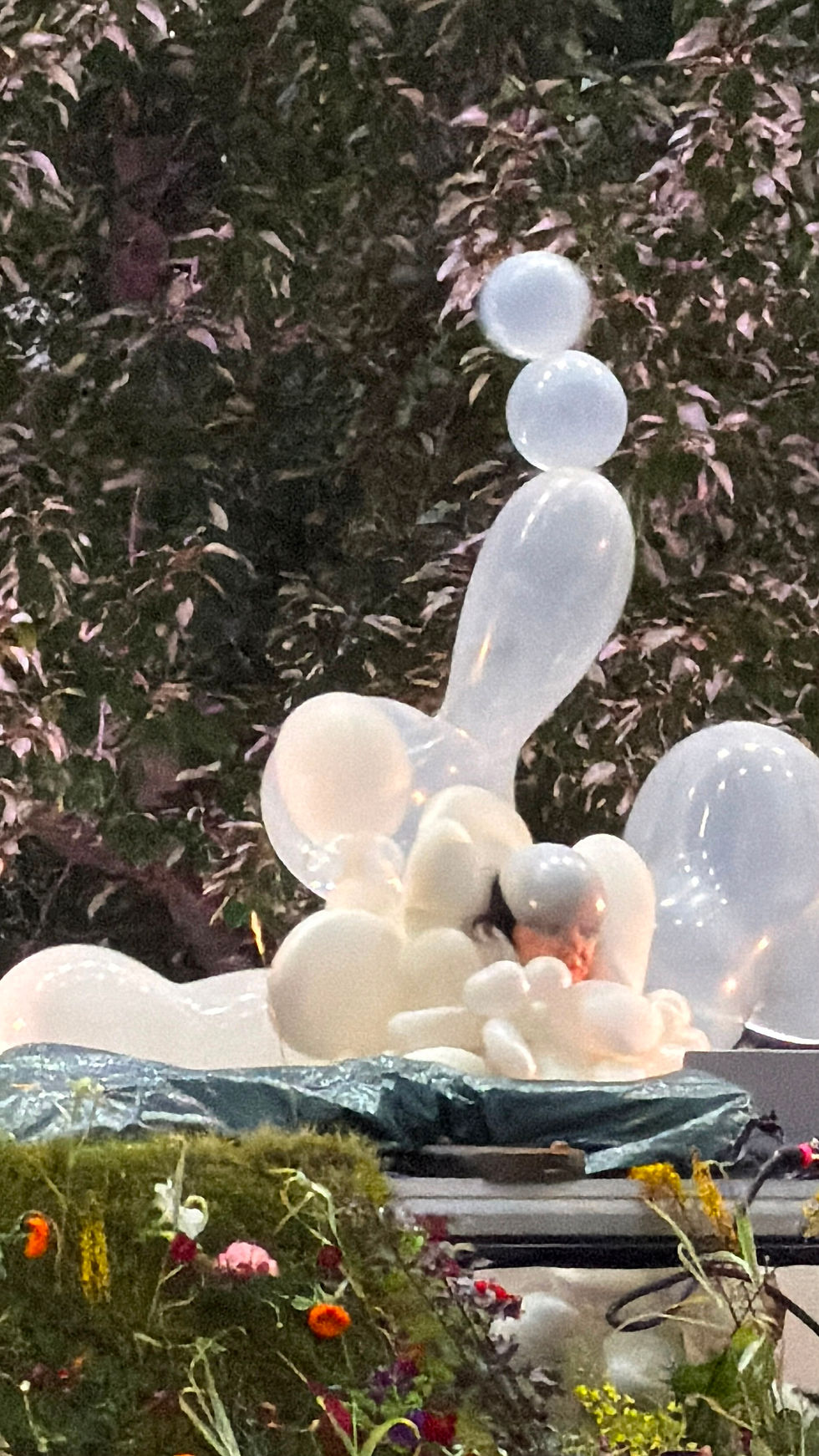
Three days of unbroken sun beforehand had made us all a little greedy, and of course the clouds rolled in right on cue — that's Icelandic weather, impossible to predict and somehow always in on the joke. We didn't get to see the sun disappear, but we felt it: the sky turned black, the temperature dropped, birds went quiet, and the whole field went emotional together in a way I didn't expect.
Then Björk got on and played a set for everyone to dance to, right there, right after — grief and joy in the same twenty minutes. Iceland doesn't really let you leave quietly, and I've stopped expecting it to.
What I Came Back Believing
This trip confirmed something I already believed: our Iceland product only gets stronger the more we test it ourselves. Our newest hotel partners are now fully vetted and ready to recommend for clients who want spectacle design over glass-igloo cliché. And our guides remain the real edge — experts not just in the Golden Circle's history and the logistics of a volcano descent, but in the culture, flavors, and lifestyle that make Iceland feel lived-in, not just seen.
Icelanders never built monuments the way the rest of Europe did. What they built instead were sagas — stories passed down by voice for centuries before anyone thought to write them. Every guide who works with us here is, in a very real sense, still doing that job. And I am proud of them! Cheers to another Iceland Season!


