


A SAPIENS TRAVEL BOOK
THE ART

MOVEMENTS


that shaped
Benelux


Small countries. Ideas too big for the map.
No region this size should have produced this much.
Six hundred years, three small countries, a few hundred kilometres of North Sea coast, and a disproportionate share of what the world calls the history of Western art.
It took more than talent. Trade routes, tolerant cities and restless craftsmen kept bumping into each other, and art kept coming out of the collisions. I spent years following that story, and this book gathers what I learned along the way. It is not an academic book. I wrote it for travellers, in plain language, to open six centuries


Highlights
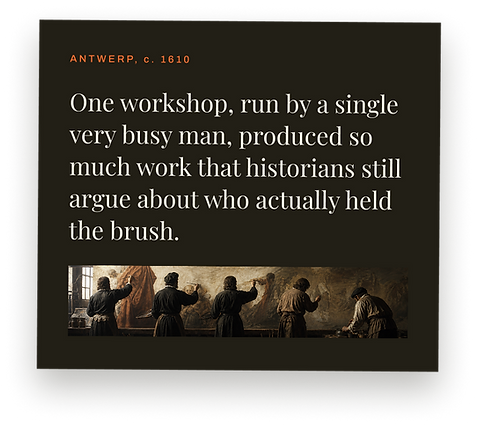
Four things I keep coming back to: a trick with oil paint, a workshop that outran its own signature, a number that still looks like a typo, and a café conversation that turned into three cities.


Eleven chapters
contador


CHAPTER ONE
1420 * 1550
Late Gothic and the Northern Renaissance

Groeningemuseum, Bruges
Morocco
4/11-5/12
Magical Deserts
$600
Brazil
4/11-5/12
Exotic Urbanism
$600
Scotland
4/11-5/12
Misty Mountains
$600
Eighteen cities, one route north
ALL CITIES →

The Netherlands
14 CITIES
The Netherlands
14 CITIES
WHERE TO STAY
Twenty-two addresses with a pulse
ALL ADDRESSES →

THE NETHERLANDS
Rosewood Amsterdam
ALL TWENTY-TWO →
Helvetica Ligh
ALL TWENTY-TWO →
Helvetica Light i

ABOUT THE AUTHOR
Erik Sadao
I grew up in Brazil, in a household that had plenty of things but not many books. Art kept turning up anyway: on a church ceiling, in a borrowed magazine, on a television documentary a neighbour happened to be watching. And it did something a house with no books couldn’t. It made the world feel larger than the room I was standing in.
I eventually studied Art History properly, first in São Paulo, later in Amsterdam. But most of what I know didn’t come from a classroom. It came from standing in front of the actual paintings, in the actual cities, arguing with what I saw until it made sense — the same method this entire company was built on. This book is that habit, written down.
READ THE FULL NOTE →
WHERE THE MONEY GOES
Written in Amsterdam.
Paid forward in São Paulo.
One hundred percent of the proceeds goes to Inspirar-te, a São Paulo non-profit that takes children and teenagers out of public-school classrooms and into the city's museums and exhibitions. For most of them it is the first time they stand in front of an original painting.
It is the argument of the book pointed in another direction. The Dutch Republic built its golden age by letting ordinary people own and commission art instead of reserving it for the church and the court. Access came first. The masterpieces followed.

I grew up on the edge of São Paulo and went to a public school, in a house where books were a luxury. I know what one gesture of encouragement can do — my primary-school teacher saw the art and history in me before I did.

ERIK SADAO · AUTHOR AND CO-FOUNDER, SAPIENS TRAVEL

Eleven chapters. Three countries. Six centuries of art shaped by trade and tolerance, told a different way each time.
I didn’t just write this down. I gathered it.