


Madrid Moves Into the Mauritshuis for a Winter


From 15 October 2026 to 17 January 2027 the Mauritshuis in The Hague hosts 25 masterpieces from the Museo Nacional Thyssen-Bornemisza in Madrid, while 25 of its own, among them Vermeer's View of Delft and Rembrandt's Simeon's Song of Praise, travel south in return. It is the first time two museums have swapped highlights simultaneously, and it will not happen again. The two houses call it a love story, and they mean it literally. Every painting arriving in The Hague, from Jan van Eyck's Annunciation Diptych to Bronzino's young man dressed up as Saint Sebastian, is about love in one of its forms. Sacred, married, mythological, or simply the love of painting itself.
Why the Spanish passport matters to us
The Thyssen is a Madrid museum with an Italian, Flemish and German heart, and the one Spanish canvas confirmed so far is El Greco's Annunciation, painted in Toledo around 1600. That is enough. For three months a piece of Catholic Spain hangs inside the building that best explains the Dutch Republic, and our Storykeepers get to work with the tension between the two.
Here is the tension in short. In the seventeenth century Spain and the Netherlands were at war for eighty years. Spanish painting answered to the Church and the court, under the eye of the Inquisition. Dutch painting answered to merchants who wanted their own faces, their own streets and their own kitchens on the wall. Same century, same appetite for painting the world as it looked, opposite bosses. Walk from El Greco's angels to Vermeer's girl and the walk itself is the lesson.

Erik Sadao, our cofounder and Head of Experiences, has been waiting for a show like this since 2019.
"One of my favourite exhibitions of the last decade was Rembrandt and Velázquez at the Rijksmuseum. The curators hung sixty paintings in pairs, one Dutch and one Spanish, and let them argue. Velázquez, Zurbarán and Murillo beside Rembrandt, Hals and Vermeer, a Spanish lamb beside a Dutch swan. It is the kind of parallel we love at Sapiens, and it made one thing very clear. The freedom of these provinces, and the absence of dogma, shaped our art forever, and in the seventeenth century produced something nobody has matched since."
Two pairings worth the trip on their own
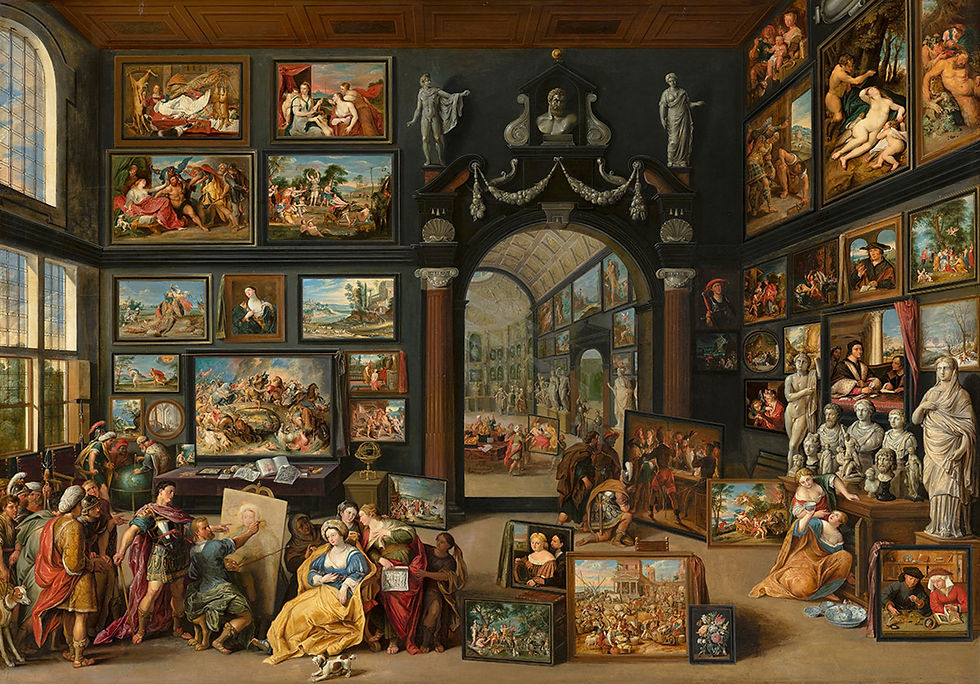
The Girl with a Pearl Earring stays in her room, as always, but a livestream links her to Michael Sweerts' Boy in a Turban in the exhibition hall, two young faces turning towards the light, painted a few years apart in the same small country. And Sebastiano del Piombo's portrait of Ferry Carondelet leaves the exhibition altogether to hang in the permanent collection, next to Willem van Haecht's Apelles Painting Campaspe. Look closely at the Van Haecht and the Del Piombo is already there, painted in miniature on the wall of the imaginary gallery. The two canvases have never been in the same room before.
OUR WAY OF DOING THINGS...
Our Storykeepers turn a museum into a story your clients will retell forever. The painter, the history few people know, the room to linger in, the dot that connects the history with the now. Art, told by people who love it and know how to make it fun. In this exhibition that means starting in Toledo with El Greco and ending in Delft with Vermeer, and spending the twenty minutes in between explaining why two countries at war ended up painting the same century in two opposite languages.
Good to know for travel advisors
The Mauritshuis is at Plein 29, in the centre of The Hague, and tickets are timed. The 25 works on loan to Madrid, View of Delft included, are off the walls until mid January, and the curators are using the space to bring lesser known paintings out of storage, so regulars will see a different house too. The exhibition overlaps with Voorlinden's tenth anniversary show in Wassenaar, twenty minutes away, and with the Kunstmuseum Den Haag and its Mondrians, which makes a two day art programme in The Hague an easy build this winter.
Our signature tour of the Mauritshuis runs throughout the exhibition, with the Thyssen loans folded in.
For three months, two collections that spent a war on opposite sides are sleeping in each other's houses. We intend to make the most of it.
Thyssen-Bornemisza ❤ Mauritshuis, Masterpieces from Madrid. Mauritshuis, The Hague, 15 October 2026 to 17 January 2027.


